
To print this article, all you need is to be registered or login on Mondaq.com.
With the rise of the “gig
economy,”
millions of Americans have turned to online platforms and
mobile applications to navigate the evolving employment landscape
and find part-time work. But what exactly do we call these
part-time workers—so-called freelancers, side-hustlers,
gig-workers—and who gets to do the naming?
A pair of dueling tech companies recently litigated this
question in a dispute that made it all the way to the Ninth
Circuit. Freelancer and Upwork both offer software platforms
that match freelance workers with freelancing jobs. Since
2013, however, Freelancer has held a federally registered trademark
for the word “FREELANCER” for goods and services under
Classes 9, 35, 36, and 45. The mark, which received
incontestable status in 2018, consists of standard characters
without claim to any particular font, style, size, or color.
In late August 2020, Freelancer sued Upwork in the Northern
District of California alleging trademark infringement and seeking
an injunction to restrain Upwork from using “freelancer”
with its software, including as a way of distinguishing
Upwork’s client‑facing and freelancer-facing mobile
application interfaces.
Upwork argued that its use of the word “freelancer” is
protected under the fair use doctrine because it only uses it
descriptively and in good faith according to the word’s plain
meaning. To this end, Upwork submitted evidence that it uses the
word “freelancers” to describe its users, and that “freelancer” is a well-known term defined as “someone who is not permanently employed by a particular
company, but sells their services to more than one company.”
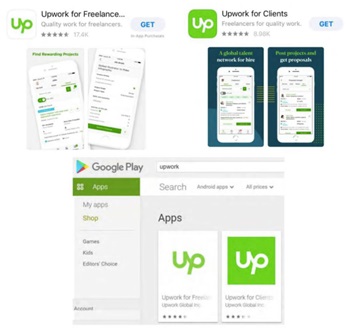
In retort, Freelancer argued that Upwork uses the term “freelancer” as a mark, rather than descriptively,
because Upwork uses “freelancer” to distinguish the
display names of its applications (“Upwork for
Freelancers” versus “Upwork for Clients”), in the
notification prompt Upwork sends to its users
(“‘Freelancer’ Would Like to Send You
Notifications”), and because Upwork displays the term in bold
font and capitalized (“Freelancer“) in
certain instances.

The district court disagreed with Freelancer’s argument,
however, finding that Upwork uses the term in good faith
descriptively rather than as a mark. In reaching its
decision, the court took note of the fact that Upwork does not list
the word “freelancer” among its publicly listed
trademarks or use a stylized font or “TM” symbol when
using the term. In addition, the district court found that
Upwork’s mere use of bold font and capital lettering was
insufficient to transform its use of “freelancer” from a
descriptive use into use as a mark. On appeal, the Ninth
Circuit affirmed, upholding the district court’s finding that
Upwork uses the term “freelancer” in good faith to
describe its users and that its use is therefore protected fair use
under 15 U.S.C. §1115(b)(4).
The Freelancer decision is good example of
why businesses should be careful when using a trademarked term to
describe their goods or services, particularly when the mark is
held by a direct competitor. While not every use of a
trademarked term will necessarily constitute fair use, under the
logic of Freelancer, a business might lessen its
liability by ensuring that its use of any descriptive term is done
in good faith according to the ordinary meaning of the term, that
the term accurately describes the goods or services to which it
applies, that it is accompanied by the business’s house mark or
branding, and that the term does not appear in an overly stylized
manner.
Freelancer Int’l Pty Ltd. v. Upwork Glob., Inc.,
No. 20-CV-06132-SI, 2020 WL 6271030, (N.D. Cal. Oct. 23, 2020),
aff’d, 851 F. App’x 40 (9th Cir. 2021)
This alert provides general coverage of its subject area. We
provide it with the understanding that Frankfurt Kurnit Klein &
Selz is not engaged herein in rendering legal advice, and shall not
be liable for any damages resulting from any error, inaccuracy, or
omission. Our attorneys practice law only in jurisdictions in which
they are properly authorized to do so. We do not seek to represent
clients in other jurisdictions.
POPULAR ARTICLES ON: Intellectual Property from United States
from WordPress https://ift.tt/3C8c7T1
via IFTTT


No comments:
Post a Comment